

What is a Heat-Resistant Conveyor Chain? Structure and Working Principle
Article content
What is a Heat-Resistant Conveyor Chain?
A heat-resistant conveyor chain is a type of chain conveyor manufactured special materials such as heat-resistant alloy steel, heat-resistant stainless steel, or nickel alloys, capable of withstanding temperatures ranging 200°C to over 800°C. Some specialized chains can endure up to 1000°C, depending on work requirements and the working environment.
This chain type is widely used in production lines with harsh conditions, where materials, semi-finished products, or finished goods need to be transported through kilns, dryers, or heat-processing areas.
.jpg)
Structure of a Heat-Resistant Conveyor Chain
1. Material Composition
-
Heat-resistant alloy steel: The most commonly used material, offering oxidation resistance and the ability to withstand high temperatures for extended periods.
-
Heat-resistant stainless steel: Ideal for environments requiring high hygiene standards, with excellent heat resistance and corrosion protection chemicals or moisture.
-
Nickel or chromium alloys: Applied in systems requiring extreme heat resistance and chemical corrosion resistance.
2. Chain Components
-
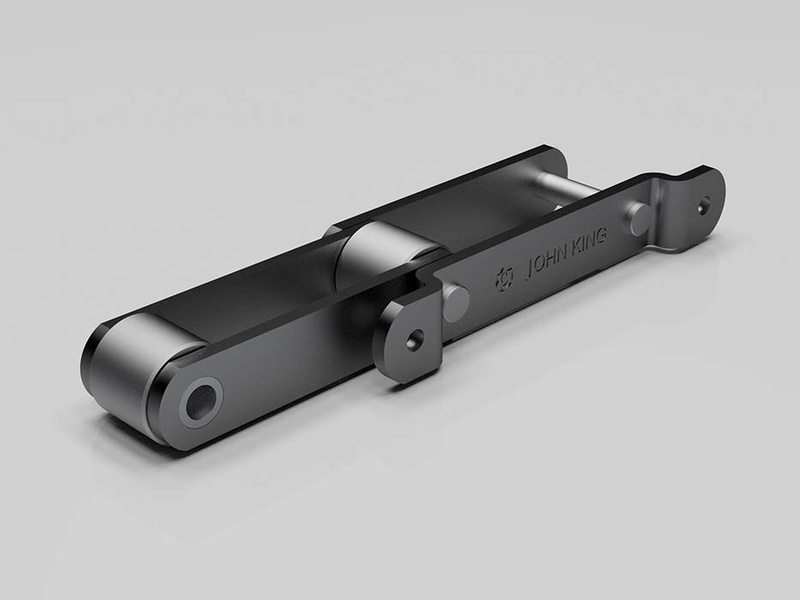
Rollers: Reduce friction when the chain moves along rails or sprockets.
-
Link plates: Connect the rollers and ensure durability under high loads and temperatures.
-
Pins and bushings: Made hardened heat-resistant alloys to maintain strong connections, wear resistance, and high-temperature durability.
3. Additional Components
-
Heat-resistant lubrication systems: Minimize friction, extend chain life, and resist evaporation at high temperatures.
-
Driving and driven sprockets: Synchronized with the chain to ensure accurate and smooth power transmission.
Working Principle of Heat-Resistant Conveyor Chains
Heat-resistant conveyor chains operate on a link transmission principle, driven by active sprockets that transfer motion through the links, allowing the entire chain to move continuously along its path. This movement transports materials one stage to another efficiently.
In high-temperature environments, the materials used in these chains prevent abnormal expansion and maintain mechanical integrity, ensuring consistent load-bearing and smooth transmission without deformation.
Advanced systems often integrate automatic lubrication and temperature monitoring to optimize performance and extend the conveyor chain’s lifespan.
Key Features of Heat-Resistant Conveyor Chains
1. High-Temperature Resistance
-
Capable of stable operation in environments up to 1000°C.
2. High Load Capacity
-
Able to transport heavy materials such as clinker, hot steel billets, and ceramics without deformation.
3. Oxidation and Corrosion Resistance
-
Resistant to corrosion caused by chemicals, industrial emissions, and high-humidity environments.
4. Exceptional Mechanical Strength
-
Withstands impact and abrasion, ensuring long service life and reduced maintenance needs.
Practical Applications of Heat-Resistant Conveyor Chains
| Industry | Application Examples |
|---|---|
| Cement | Transporting clinker kilns to cooling or grinding areas. |
| Metallurgy | Moving hot steel billets and processed metal components. |
| Ceramics | Transporting ceramic products through high-temperature kilns. |
| Thermal Power | Handling hot ash and fuel materials in combustion zones. |
| Food Processing | Conveying materials through high-temperature drying or sterilization processes. |
.jpg)
Conclusion
A heat-resistant conveyor chain is the optimal solution for businesses needing to transport materials or goods through high-temperature environments. With its specialized structure and outstanding heat resistance and load-bearing capabilities, this equipment enhances operational efficiency and extends production line durability.
If your business is seeking high-quality heat-resistant conveyor chains, contact us now for professional consultation and customized quotations!
AAdministratorsQTV
Welcome. Feel free to leave a comment, we will respond soon